In this article15 sections
If you run a commercial kitchen, NFPA 96 is the fire safety standard behind your hood cleaning schedule, the sticker on your hood and most of the questions a fire inspector asks about your exhaust system. This guide explains NFPA 96 hood cleaning requirements in plain English: how often your system needs attention, what “clean” actually means, what records you should keep and how to stay ahead of inspections.
What is NFPA 96?
NFPA 96 is the Standard for Ventilation Control and Fire Protection of Commercial Cooking Operations, published by the National Fire Protection Association. It covers the system that pulls grease-laden smoke and vapor away from your cooking line: the hood, grease filters, plenum, ductwork, exhaust fan and the fire-extinguishing system that protects them.
The standard is revised on a regular cycle. The current edition is 2024, but your local fire department decides which edition it enforces. Most fire departments in the U.S. enforce the International Fire Code, which requires commercial kitchen exhaust systems to be inspected and cleaned and points to NFPA 96 cleaning standards and ANSI/IKECA C10 for how that work should be done. Your fire department is the “authority having jurisdiction” (AHJ), and it can set stricter rules than the baseline.
Why it matters
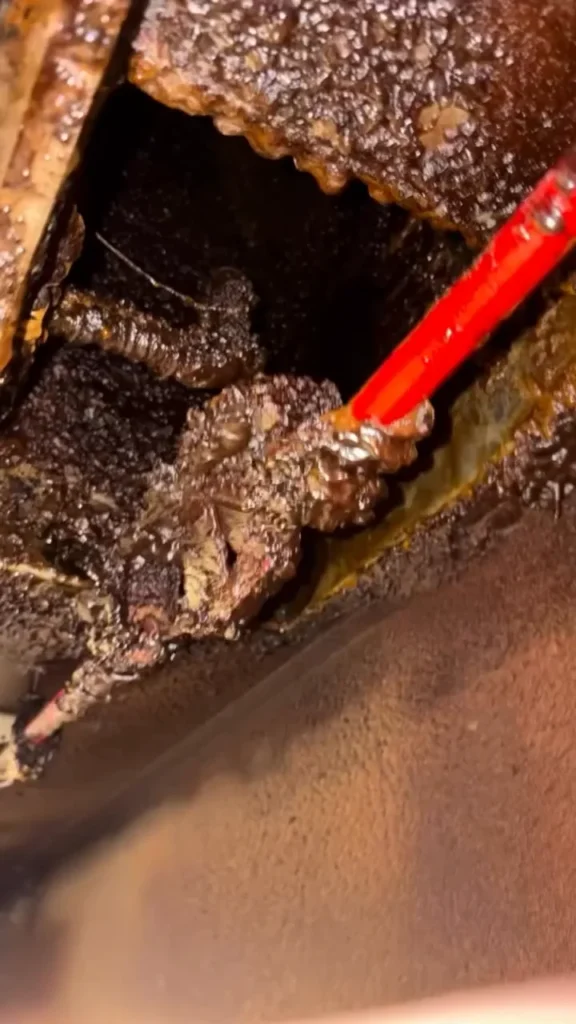
Grease that collects in a hood, duct or fan is fuel. When it ignites, the fire can travel through the ductwork, out of sight and out of reach of the suppression nozzles over your fryers. According to an NFPA study of fires from 2010 to 2014, U.S. fire departments responded to an average of 7,410 fires a year at eating and drinking establishments. Cooking equipment was involved in 61% of them, and failure to clean was a factor in 22%.
The fix is not complicated: a regular inspection and cleaning schedule matched to how hard your kitchen cooks, done by trained technicians, with records that prove it.
Who is responsible?
NFPA 96 fire safety standards put the ultimate responsibility for inspection, maintenance and cleaning on the owner of the system. In practice, that usually means the restaurant or facility operator, even in a leased space. You can hire a company to do the work, but it is your kitchen that gets cited, and your records the inspector or insurer will ask to see.
How often does NFPA 96 require inspection?
NFPA 96 fire safety standards set minimum inspection intervals based on what and how much you cook:
| Type of cooking operation | Minimum frequency |
|---|---|
| Solid fuel cooking (wood, charcoal) | Monthly |
| High-volume cooking, such as 24-hour kitchens, charbroiling or wok cooking | Quarterly |
| Moderate-volume cooking | Semiannually (every 6 months) |
| Low-volume cooking, such as churches, day camps, seasonal businesses or senior centers | Annually |
These are inspection intervals. If the inspection finds grease buildup, the system has to be cleaned, and for most working restaurants that means cleaning on this same schedule. Some jurisdictions set their own intervals: Portland Fire & Rescue, for example, lists wok cooking alongside solid fuel at monthly. For a deeper look at choosing your interval, see How Often Should a Commercial Kitchen Hood Be Cleaned?
What does “clean” mean under NFPA 96?
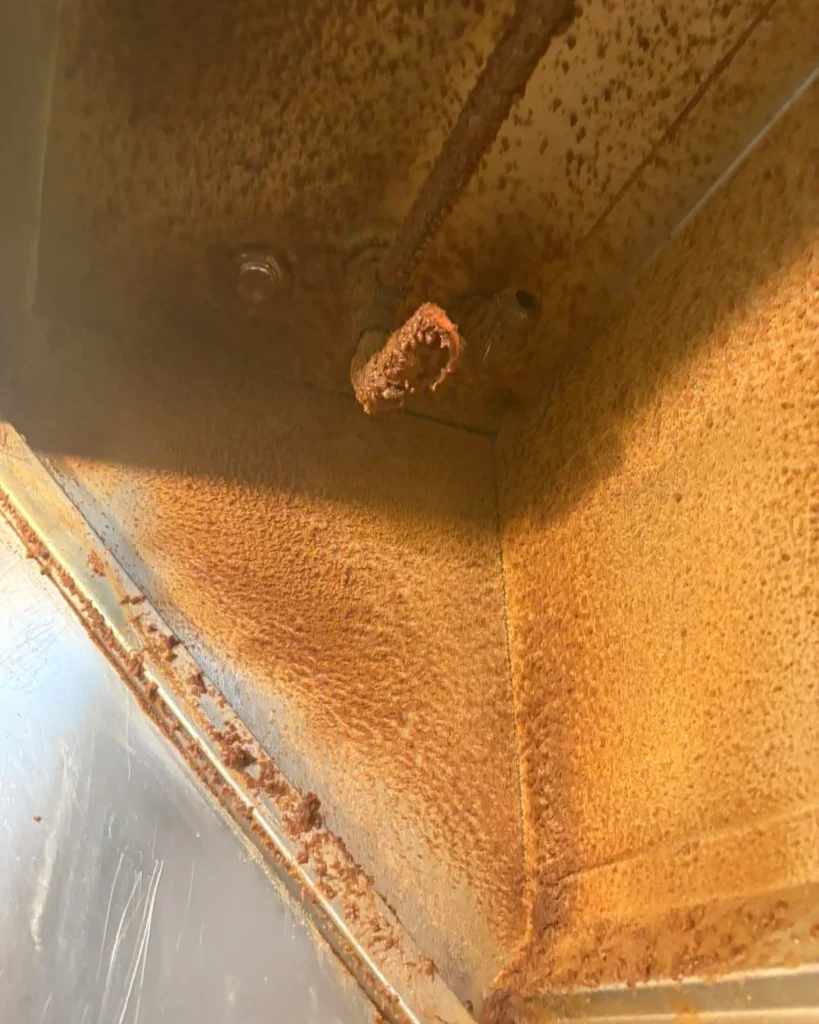
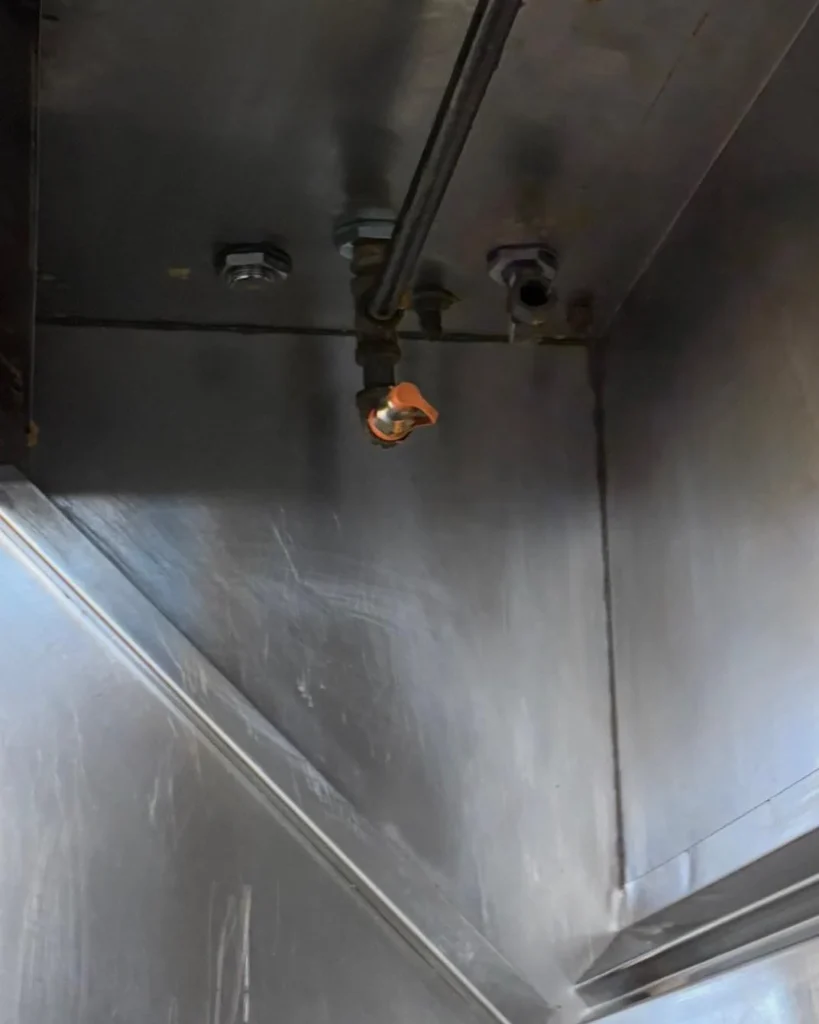
NFPA 96 cleaning standards do not consider a system clean just because the hood looks shiny. The standard calls for the hood, grease removal devices, fans, ducts and other parts of the system to be cleaned to bare metal.
To decide whether cleaning is needed, inspectors use a depth gauge comb. Under the 2024 edition, a grease deposit of 0.078 inch (2,000 microns) on duct and hood surfaces, or 0.125 inch (3,175 microns) inside the fan housing, means the system needs to be cleaned. That is roughly the thickness of a few sheets of paper, so buildup crosses the line faster than most operators expect.
The standard also sets ground rules for how the work is done:
- The whole system is cleaned, not just the parts you can see: hood, filters, plenum, ductwork and exhaust fan.
- Flammable solvents are not allowed.
- The fire suppression system must not be left inoperable during cleaning.
- Electrical switches that could be turned on accidentally are locked out, then returned to normal when the work is done.
- Access panels that are opened for cleaning are closed and sealed again before the crew leaves.
Swapping or washing filters is important daily and weekly work, but it does not replace a full system cleaning. Hood Filters vs. a Full Exhaust System Cleaning explains the difference.
What an NFPA 96 compliant hood cleaning includes
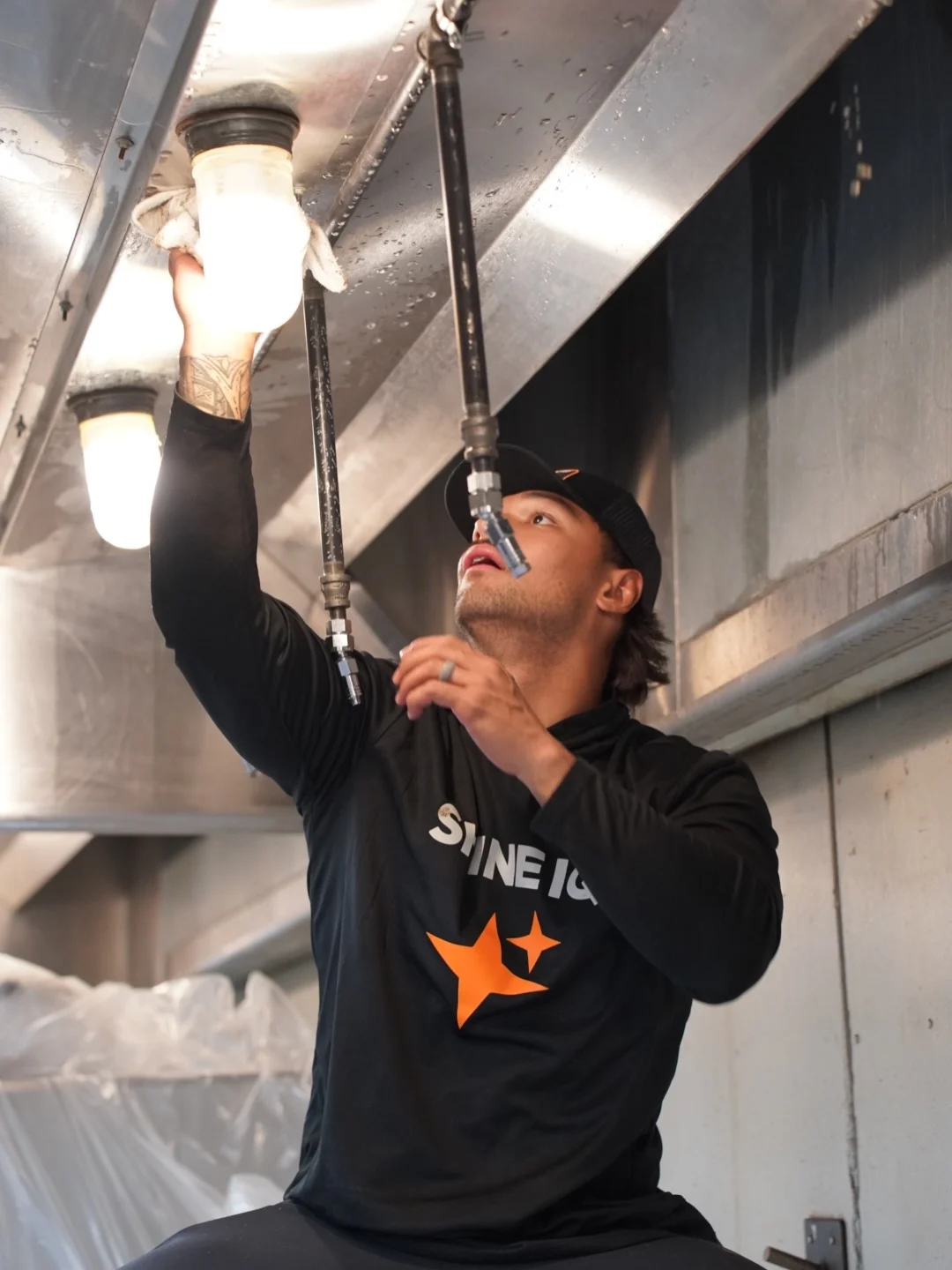
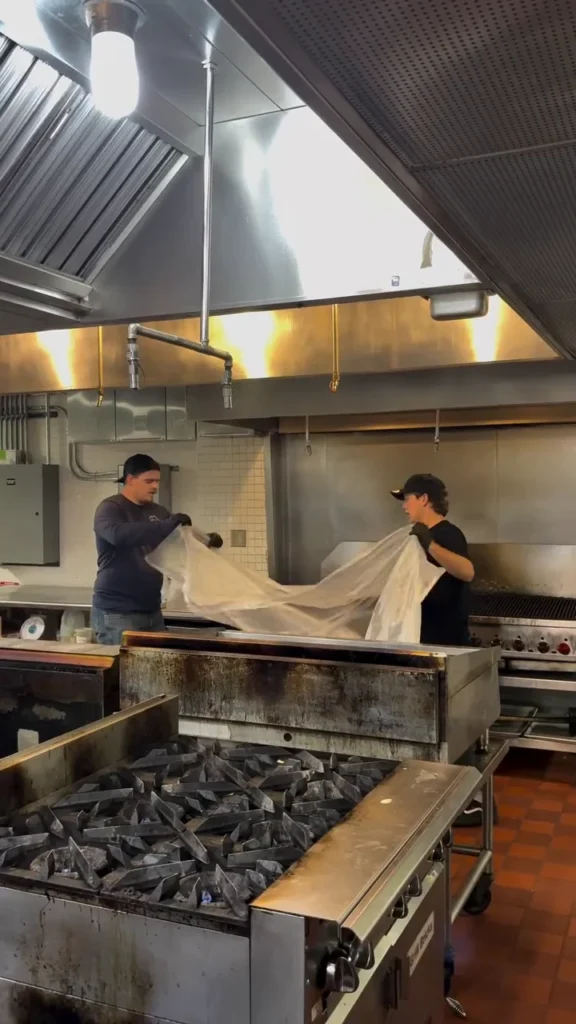
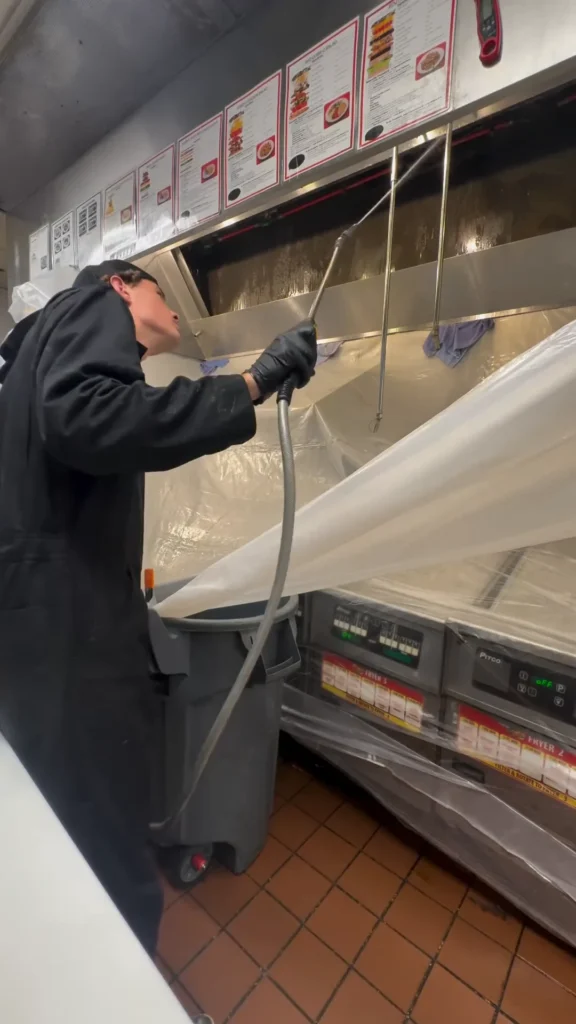
A proper cleaning follows the grease from the cooking line to the roof. At ShineIQ, every hood and exhaust cleaning includes:
- Setup. Cover equipment, set up containment and isolate the work area.
- Scrape and degrease. Remove heavy deposits by hand, then apply commercial degreaser.
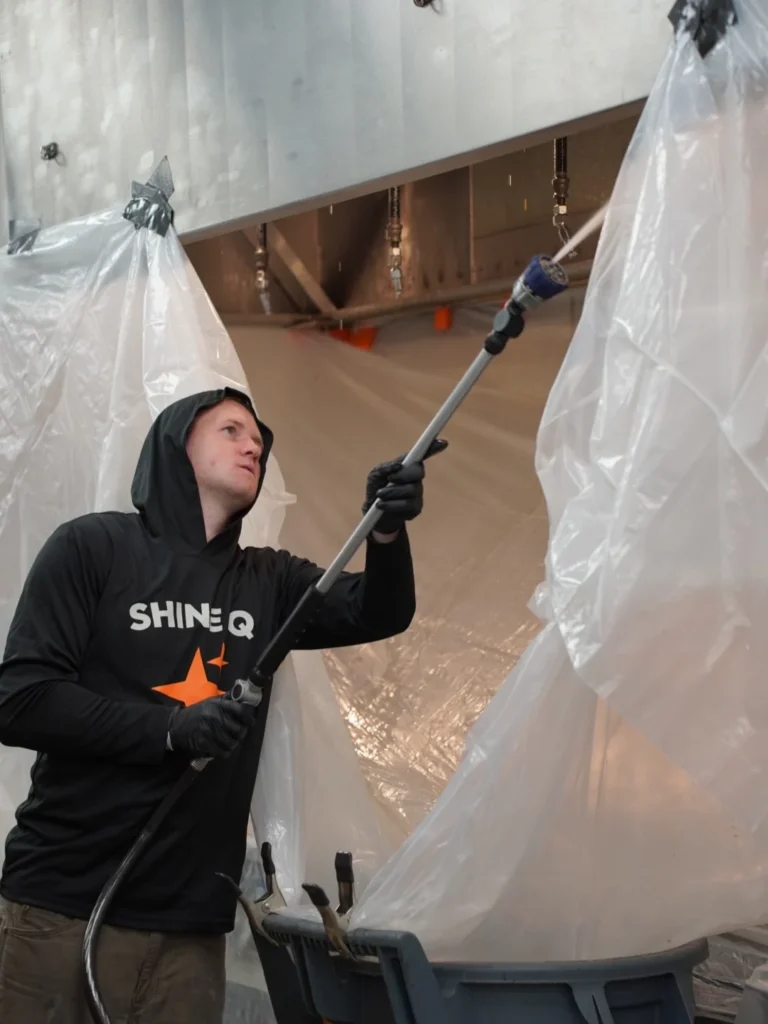
- Hot-water power washing. Wash loosened grease from the hood, filters and ductwork.
- Duct and fan. Clean accessible ductwork and the rooftop exhaust fan, including blades, housing and curb.
- Cleanup. Contain wastewater, remove covers and wipe down stainless.
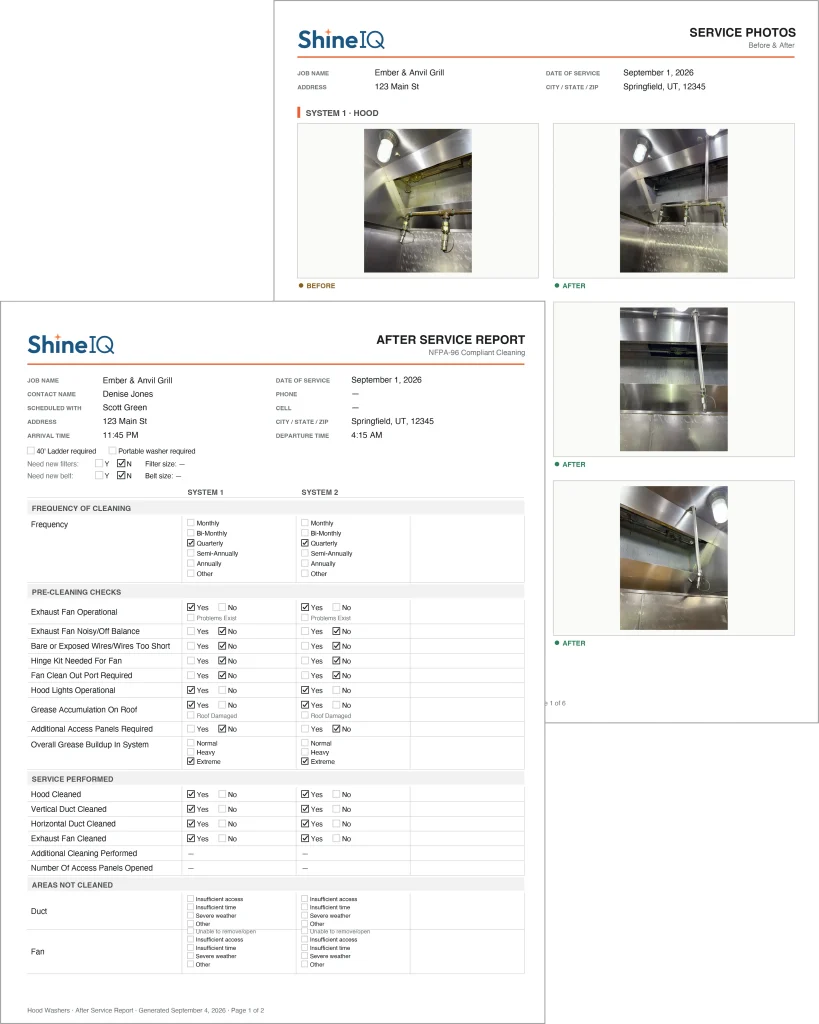
- Documentation. Record before and after photos, findings and the next service date.
Records: the certificate, the label and the report
Documentation is one of the NFPA 96 hood cleaning requirements inspectors check first. After each inspection or cleaning, you should have:
- A certificate or label in the kitchen showing the name of the service company, the person who did the work and the date. This is the sticker inspectors look for on your hood.
- A written report from the company, including any areas that were inaccessible or not cleaned.
- Copies kept on the premises, ready for the fire inspector. Some jurisdictions also require the cleaning company to send reports directly to the fire department.
Insurers care about these records too. After a kitchen fire, one of the first things an adjuster asks for is proof of regular exhaust cleaning. Hood Cleaning Records: What to Keep for Fire Inspectors and Insurers covers what to keep and for how long.
Access panels and areas that cannot be cleaned
Ductwork can only be cleaned where a technician can reach it. NFPA 96 fire safety standards require access openings in the duct system so every section can be inspected and cleaned. When a section is not accessible, the report should say so. A good cleaning company will point out where an access panel is missing and recommend adding one, rather than quietly skipping that section.
What fire inspectors look for
A fire inspection of a commercial kitchen usually covers more than the hood. Inspectors check the date on your cleaning label, visible grease on the hood and filters, the tag on your fire suppression system, your Class K extinguisher and whether access panels and the rooftop fan are in good shape. See What Fire Inspectors Check in a Commercial Kitchen Exhaust System for the full checklist.
Warning signs between cleanings
Your schedule is a minimum. Grease dripping from filters, smoke that hangs in the kitchen, a louder or vibrating fan and grease staining on the roof are all signs the system needs attention sooner. 7 Signs Your Kitchen Hood System Is Overdue for Cleaning walks through each one and what to do about it.
What hood cleaning costs
Price depends mostly on the size of the system: the number and length of hoods, how far the duct runs, the type of fan, how many access panels the crew has to work through and how much grease has built up since the last service. How Much Does Commercial Hood Cleaning Cost? explains each factor and what to look for in a quote.
NFPA 96 hood cleaning requirements: a checklist for operators
- Know which cooking category your kitchen falls into, and confirm the required interval with your local fire department.
- Put inspection and cleaning on a recurring schedule, not a reminder you have to remember.
- Keep the latest cleaning label on the hood and the written report on site.
- Clean or exchange filters on a daily or weekly routine, and never cook without filters in place.
- Keep access panels and the path to the roof clear.
- Have your fire suppression system inspected at least every 6 months.
- Read the report after each cleaning and act on any deficiencies it lists.
How ShineIQ helps
ShineIQ provides NFPA 96 compliant hood and exhaust cleaning for restaurants, schools, hospitals and multi-location operators in Utah, Idaho, Colorado, Oregon and Washington. We start with a free inspection, give you a clear quote and work around your hours, usually overnight or early morning. After every visit you get an After-Service Report with before and after photos and your next service date, so your records are ready when the inspector or insurer asks.
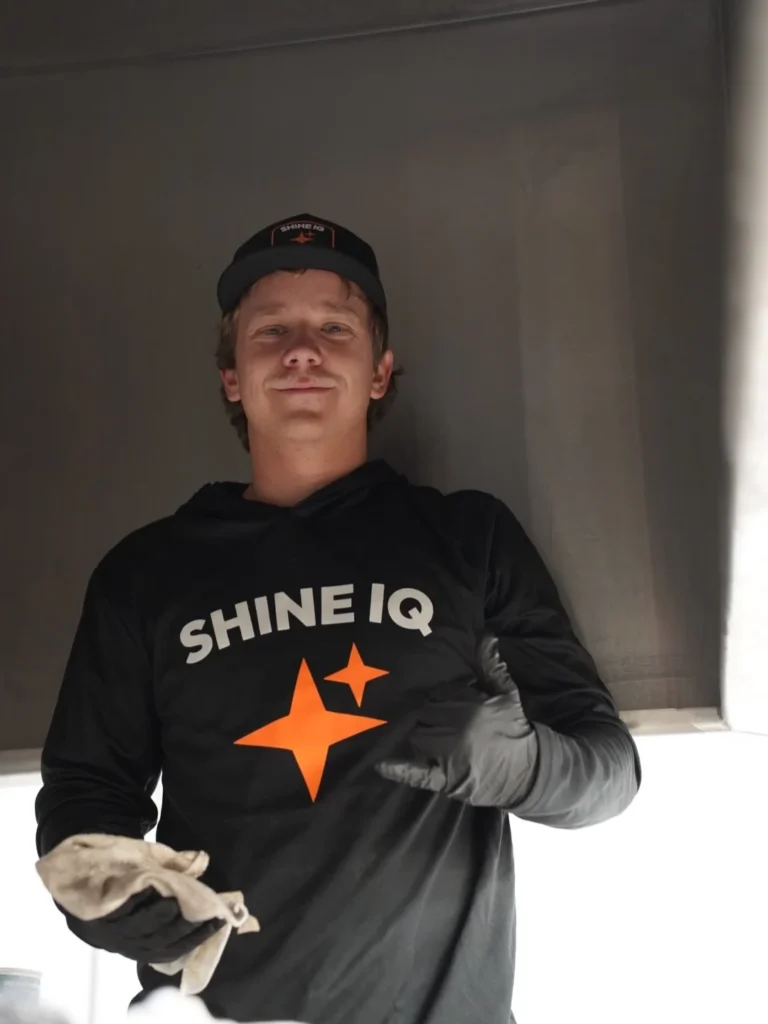
Not sure where your system stands?
We will inspect your hood, ductwork and fan, show you what we find and recommend a schedule that fits how your kitchen cooks.
Sources
- NFPA 96: Standard for Ventilation Control and Fire Protection of Commercial Cooking Operations
- Portland Fire & Rescue FIR 8.08: kitchen exhaust cleaning requirements
- International Fire Code inspection frequency and records (City of Charleston)
Related guides
- How Often Should a Commercial Kitchen Hood Be Cleaned?
- What Fire Inspectors Check in a Commercial Kitchen Exhaust System
- Hood Cleaning Records: What to Keep for Fire Inspectors and Insurers
- 7 Signs Your Kitchen Hood System Is Overdue for Cleaning
- Hood Filters vs. a Full Exhaust System Cleaning
- How Much Does Commercial Hood Cleaning Cost?
This guide is general information, not legal advice. Your local fire authority has the final say on which edition of the NFPA 96 fire safety standard applies and how often your system must be serviced.