In this article12 sections
A commercial kitchen fire inspection usually takes less time than a lunch rush, but the exhaust system gets close attention. Inspectors are checking that the hood, ductwork, fan and fire suppression system are maintained the way NFPA 96, the national fire safety standard for commercial kitchen exhaust systems, and your local fire code require. Knowing what is on their list makes it easy to pass.
Every fire department runs its inspections a little differently, so treat this as a general checklist, not your jurisdiction’s official form.
1. Your hood cleaning label
The first thing many inspectors look for is the label or certificate on your hood. It should show the cleaning company, the technician and the date of the last service. The date needs to fall within the interval required for your type of cooking, such as quarterly for high-volume kitchens or every 6 months for moderate volume. An expired or missing label is one of the most common kitchen citations. See How Often Should a Commercial Kitchen Hood Be Cleaned? to check your interval.
2. Visible grease
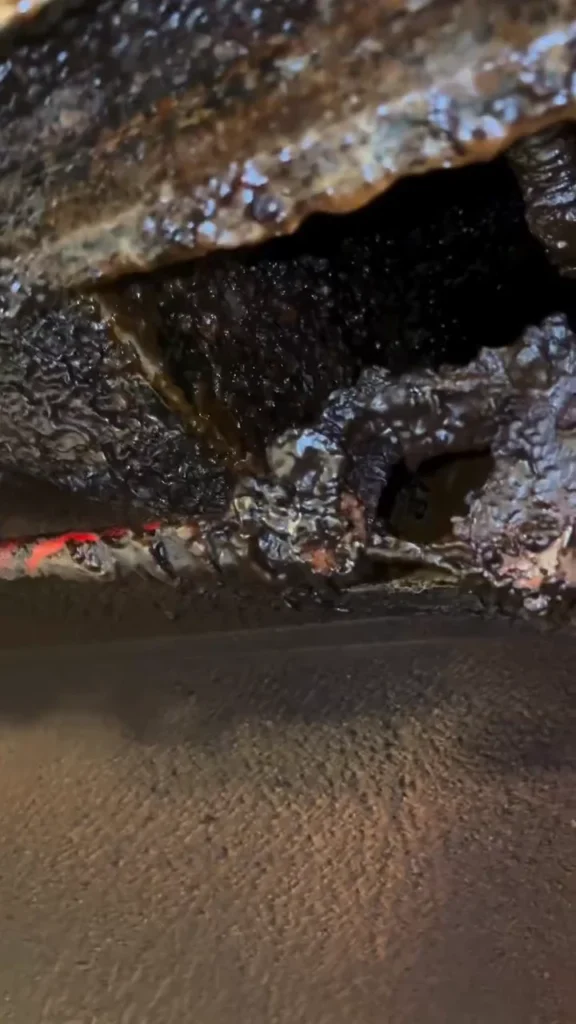
Inspectors look at the hood interior, filters and any surfaces they can reach. Grease dripping from filters, pooled in the hood or coating the area around the fan is a clear sign the system is overdue, regardless of what the label says.
3. Grease filters
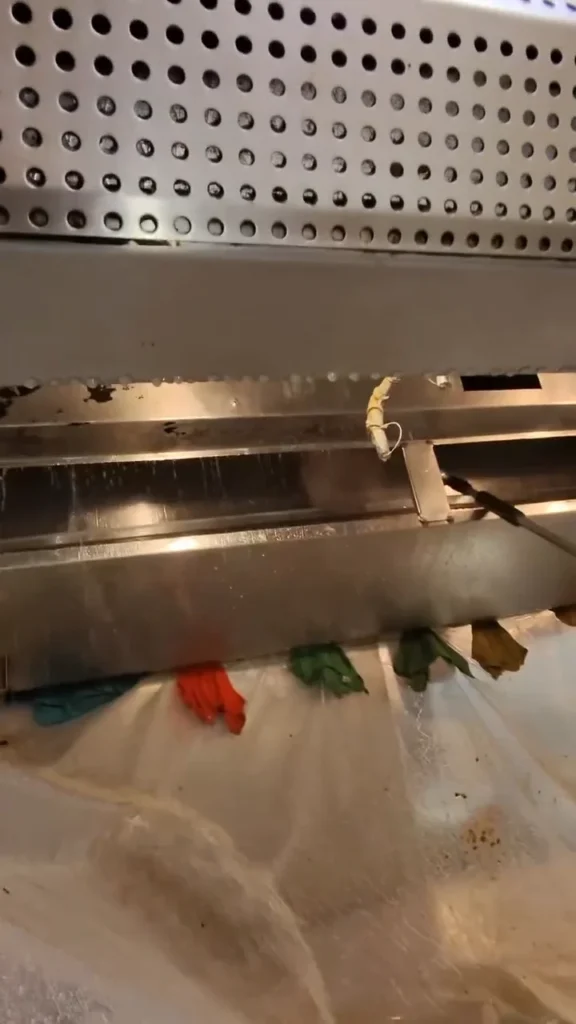
- Filters are in place whenever the line is cooking. Running without filters sends grease straight into the duct.
- Filters are the right type. NFPA 96 fire safety standards require listed grease filters; mesh filters are not allowed as the primary grease removal device.
- Filters fit the hood with no gaps, and damaged filters have been replaced.
- Filters are reasonably clean for the time of day.
4. Your written service report
Some inspectors ask to see the report from your last cleaning, not just the label. NFPA 96 cleaning standards call for the cleaning company to provide a written report that includes any areas that were inaccessible or not cleaned. Keep it on site where a manager can find it quickly. Hood Cleaning Records: What to Keep lists everything worth having on file.
5. The fire suppression system
- A current service tag showing inspection within the last 6 months.
- Nozzles aimed at the appliances they protect, with blow-off caps in place.
- A manual pull station that is easy to reach and not blocked.
- Appliances that line up with the system’s coverage. Moving or adding a fryer without updating the suppression system is a frequent finding.
6. Class K fire extinguisher
Kitchens that cook with vegetable or animal oils need a Class K extinguisher near the cooking line, usually with a placard reminding staff to activate the suppression system first. Inspectors check that it is present, mounted, charged and tagged within the last year.
7. Access panels
Duct access panels need to be closed, sealed and clearly marked. Inspectors may ask about sections of duct with no access, since a system that cannot be reached cannot be cleaned. If your last report lists inaccessible areas, adding access panels fixes the problem permanently.
8. The exhaust fan and roof
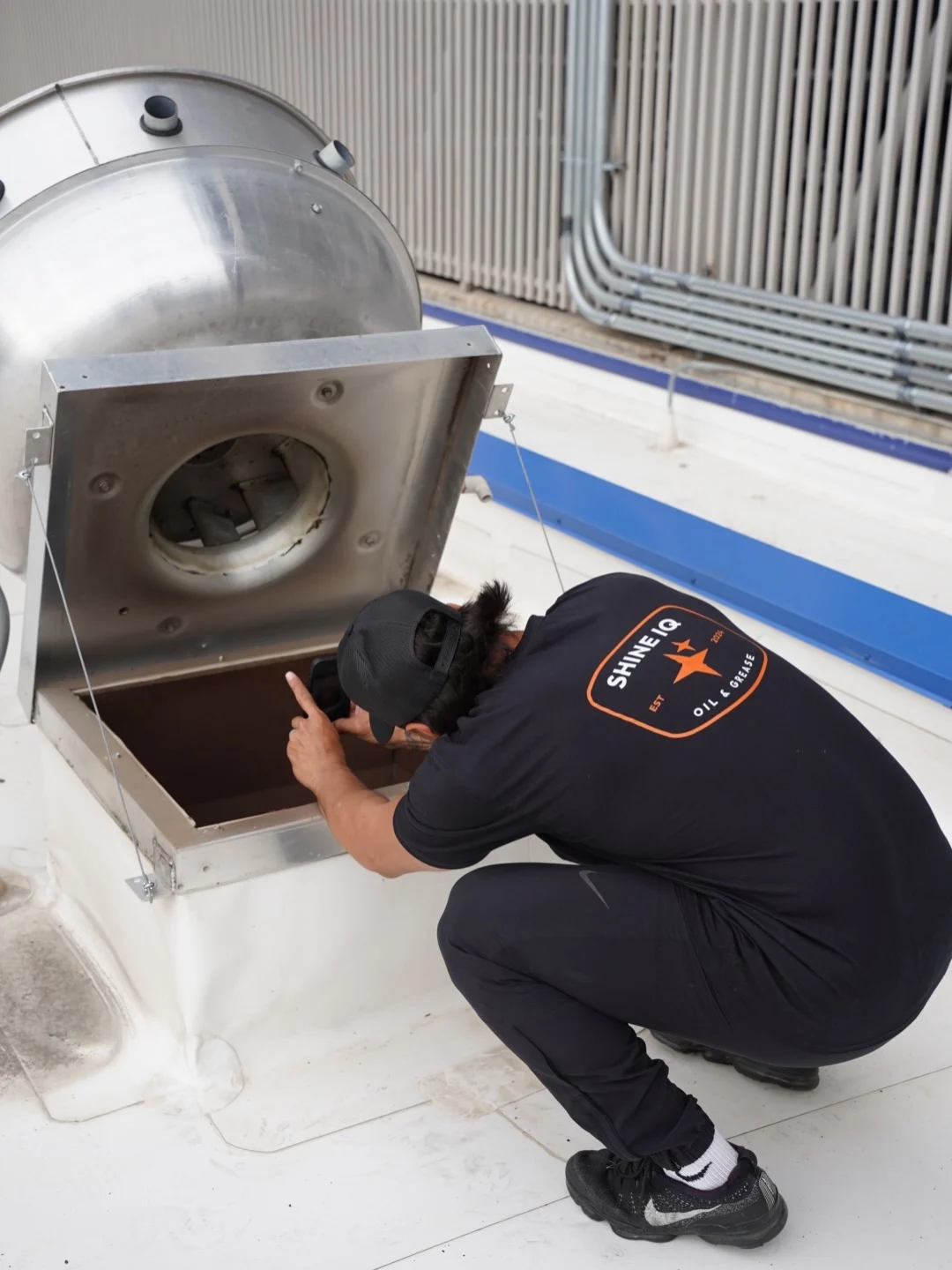
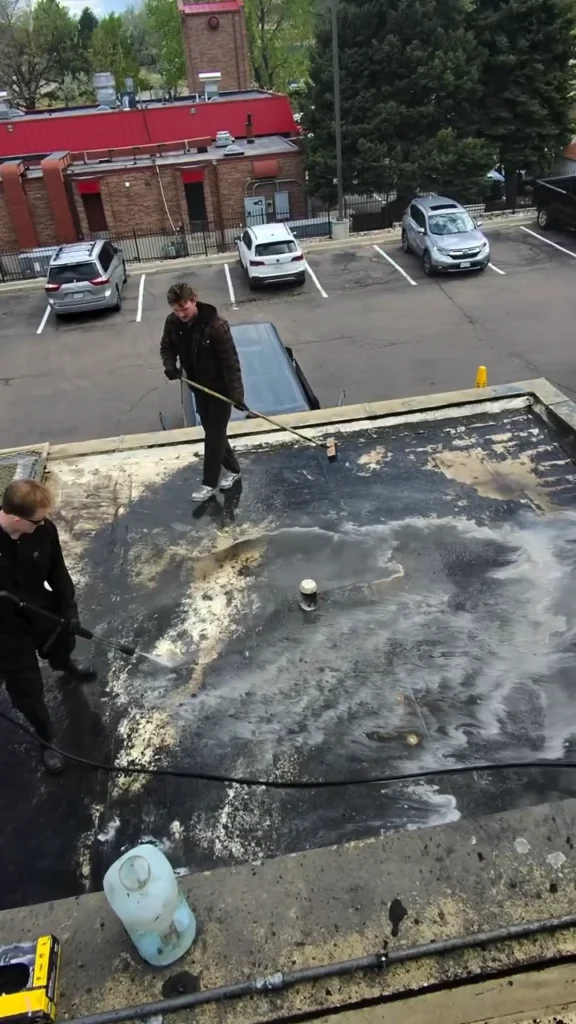
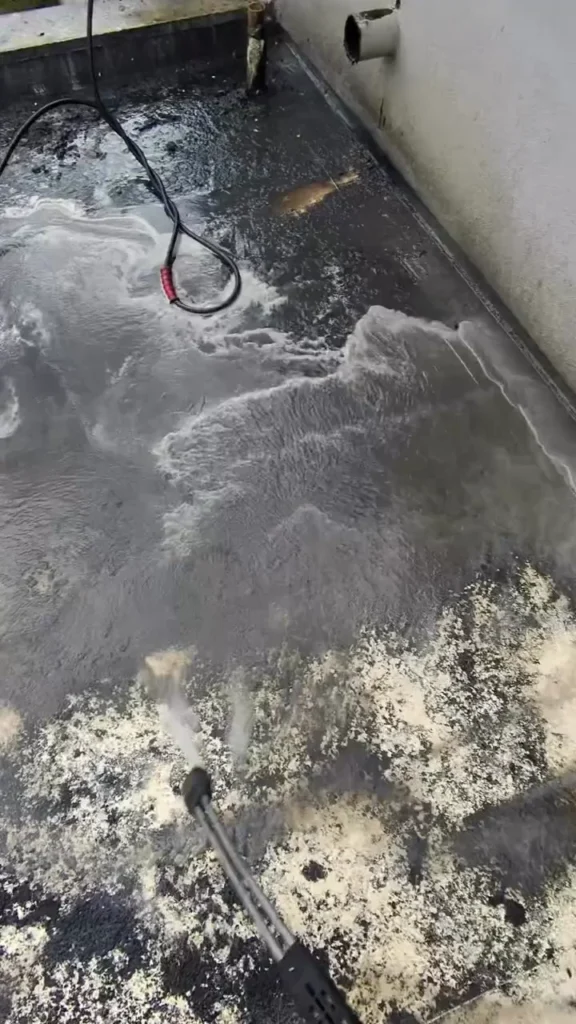
On a full inspection, the roof matters too. Inspectors look for grease leaking from the fan, staining or pooling on the roof, a missing or overflowing grease containment system and fan hinges that allow the fan to be opened for cleaning. Rooftop grease is a fire risk and can damage the roof membrane.
9. The exhaust system runs while you cook
The hood fan should be on whenever cooking equipment is in use. Inspectors may also check that hood lights work and that nothing is stored on top of or hanging from the hood.
How to prepare for a commercial kitchen fire inspection
- Check the date on your hood label against your required interval.
- Find your last cleaning report and suppression system report, and keep them together.
- Clean or swap filters the morning of the inspection.
- Make sure the pull station, extinguisher and access panels are clear.
- Fix anything listed as a deficiency on your last report.
The easiest way to stay ready is to keep cleaning on a fixed schedule with a company that documents every visit. ShineIQ’s After-Service Report includes before and after photos, deficiencies found and your next service date, so you can hand an inspector proof of the work in seconds. For the full set of NFPA 96 fire safety requirements, read the NFPA 96 Hood Cleaning Requirements: A Plain-English Guide.
Inspection coming up?
We can inspect your system ahead of time, clean it if it needs it and give you a report to have on hand.
Sources
- NFPA 96: Standard for Ventilation Control and Fire Protection of Commercial Cooking Operations
- International Fire Code inspection frequency and records (City of Charleston)
Related guides
- NFPA 96 Hood Cleaning Requirements: A Plain-English Guide
- Hood Cleaning Records: What to Keep for Fire Inspectors and Insurers
- Hood Filters vs. a Full Exhaust System Cleaning
This guide is general information, not legal advice. Your local fire authority has the final say on which edition of the NFPA 96 fire safety standard applies and how often your system must be serviced.