In this article9 sections
Cleaning your hood system is only half of compliance. The other half is being able to prove it. Fire inspectors ask for records, insurers ask for records and, after a fire, investigators and adjusters ask for them first. Here are the hood cleaning records to keep, where to keep them and how long to hold on to them.
What NFPA 96 fire safety standards and the fire code expect
NFPA 96, the national fire safety standard for commercial kitchen exhaust systems, and the International Fire Code both call for documentation after every inspection and cleaning:
- A certificate or label kept on the premises, showing the service company, the person who did the work and the date.
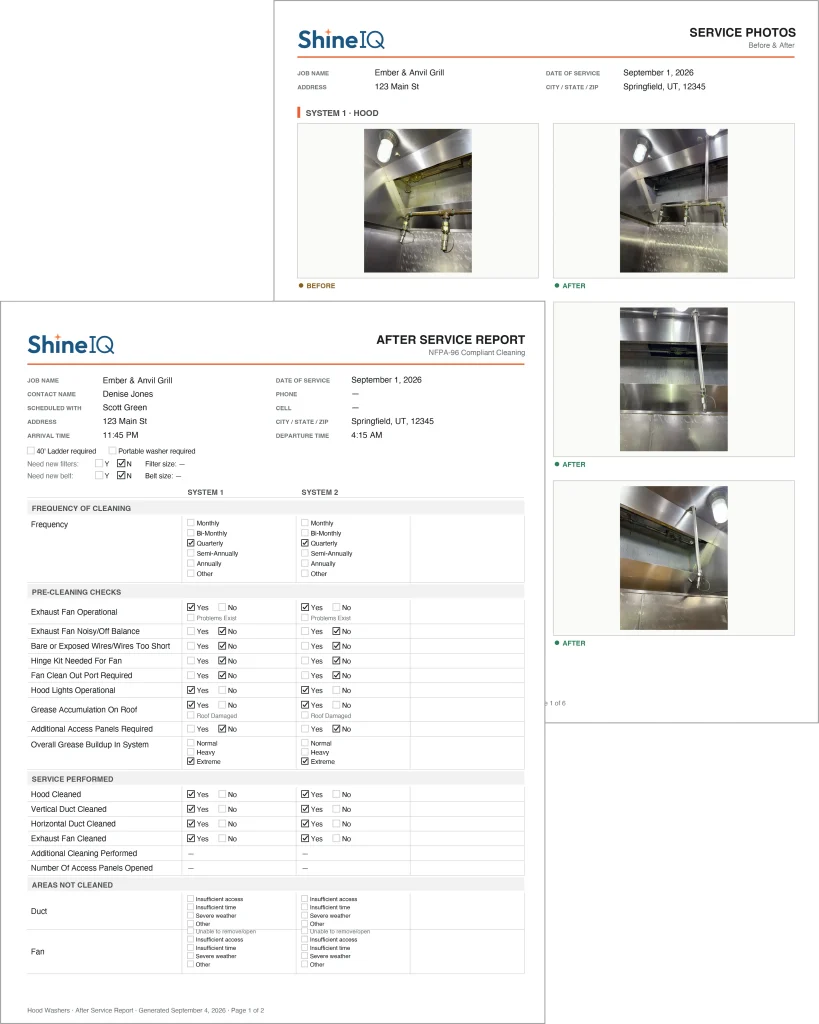
- A written report from the cleaning company, including any areas that were inaccessible or not cleaned.
- Inspection and cleaning records that identify who did the work, when and what was done, kept available for the fire code official.
Some cities go further. Portland Fire & Rescue, for example, requires the label to list areas not cleaned and the technician’s certification number, and expects owners to keep reports and the cleaning schedule on site.
The full list of hood cleaning records to keep
| Record | Why it matters |
|---|---|
| Hood cleaning label | The first thing inspectors check; shows the last service date |
| Written cleaning report | Shows what was cleaned, what was not and any deficiencies |
| Before and after photos | Shows the condition of the hood, duct and fan, not just a signature |
| Fire suppression system inspection report | Required at least every 6 months |
| Class K extinguisher tag | Annual service record |
| Filter cleaning or exchange log | Shows daily and weekly maintenance between cleanings |
| Repair records | Fan repairs, access panel installs, hinge kits and grease containment |
| Deficiency follow-ups | Proof that problems on a report were fixed |
Why insurers care
Kitchen exhaust fires are a well-known risk for restaurants, and many commercial property policies and underwriters expect regular, documented exhaust cleaning. After a fire, adjusters and fire investigators typically ask for maintenance records to understand what happened. Gaps in those records, an expired cleaning label or a report showing uncorrected deficiencies can make a claim harder to support.
Every policy is different. Read yours, or ask your agent, for any specific maintenance conditions, and keep your records in a form you can hand over quickly.
What makes a report useful
A sticker with a date proves someone was there. A good report proves what they did. Look for a report that includes:
- Date, company and technician name.
- Each hood, duct section and fan serviced.
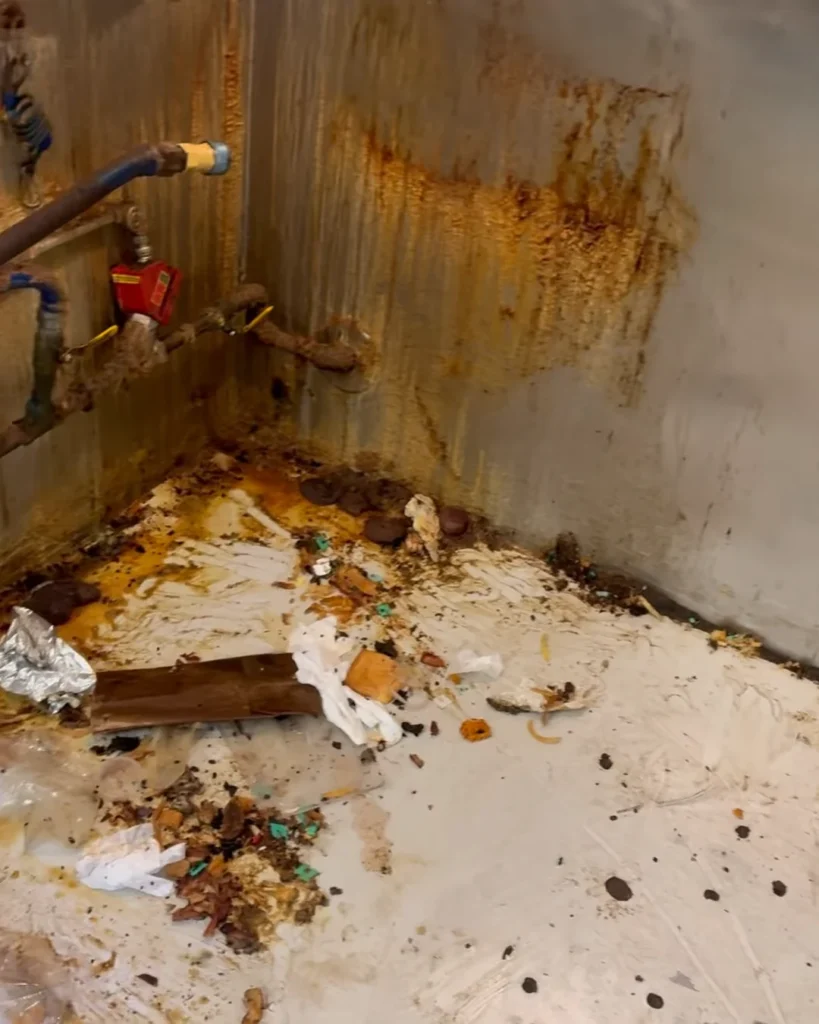
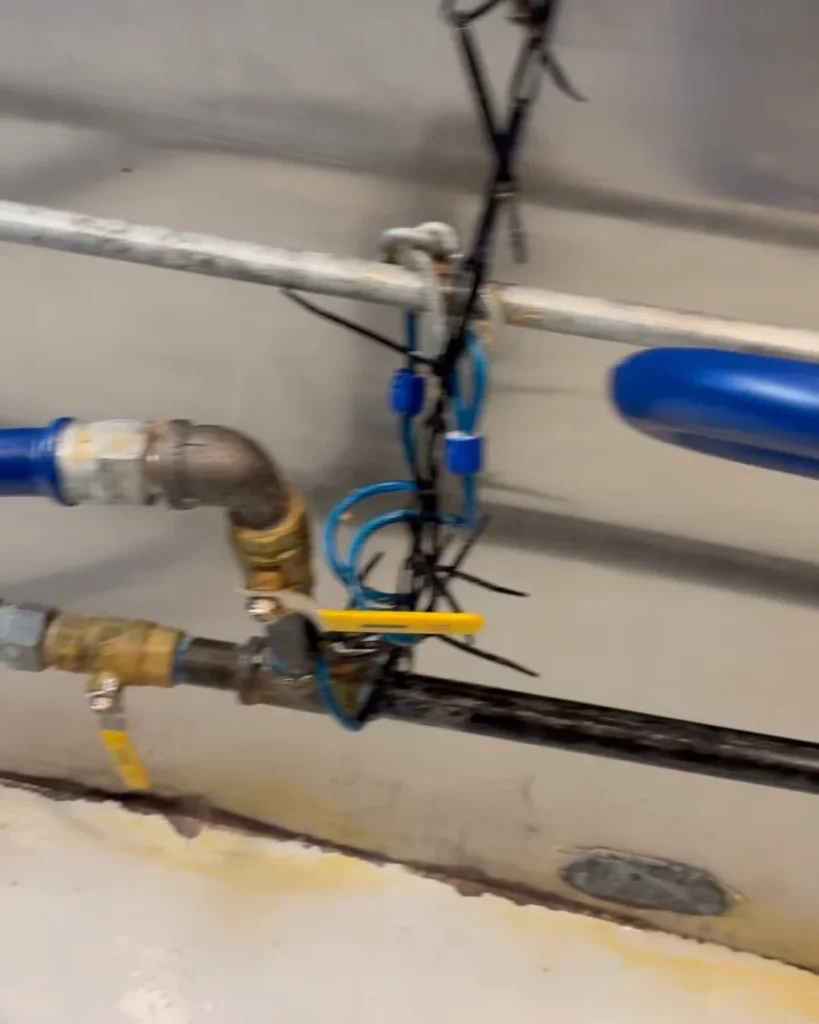
- Before and after photos of the hood, filters, ductwork and fan.
- Any areas that were inaccessible or not cleaned, and why.
- Deficiencies found, such as missing access panels, damaged filters or fan problems.
- A recommended next service date.
How long to keep records
NFPA 96 fire safety standards and the fire code require records to be kept but do not set a single retention period that applies everywhere. As a practical rule, we recommend keeping at least three years of cleaning and suppression records, and longer if your insurer or landlord asks for it. The most recent label and report should always be on site.
Where to keep them
- On site: the current label on the hood and a printed or tablet-ready copy of the latest report where any manager can find it.
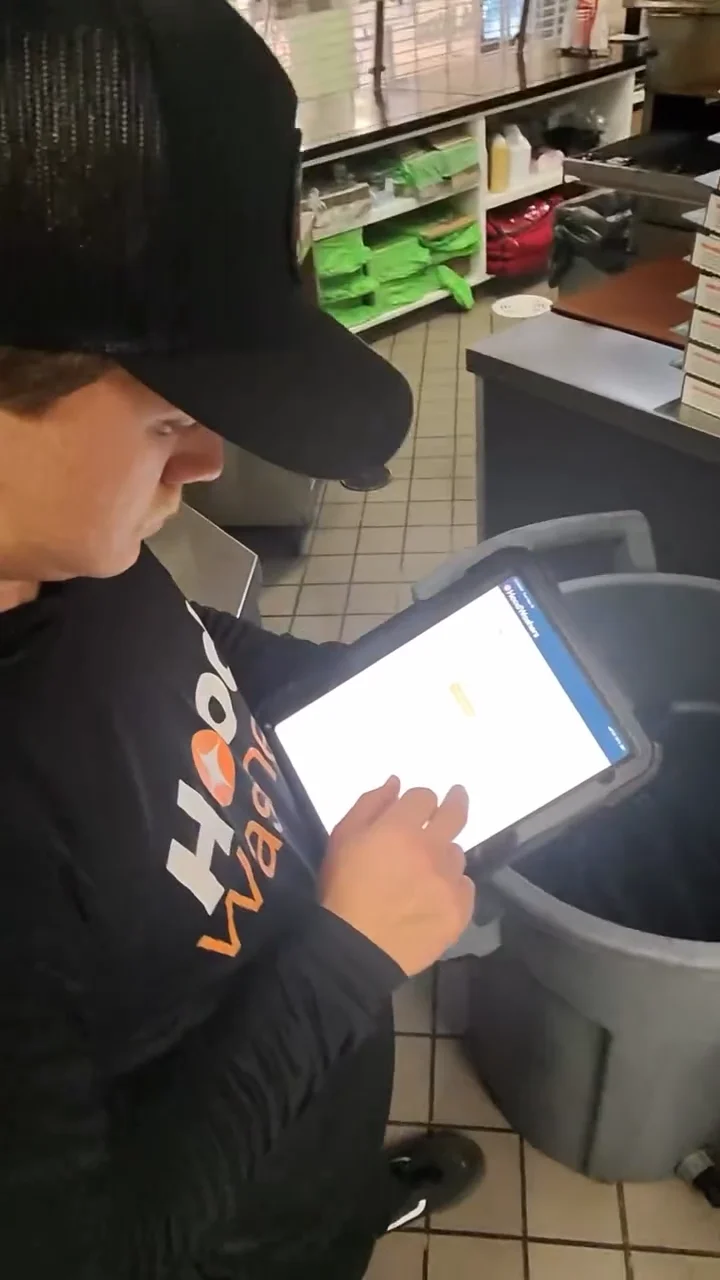
- Digitally: a shared folder or vendor portal with every report and photo, organized by location and date.
- For multiple locations: one central record for all sites, so a regional manager can see which kitchens are due without calling each one.
How ShineIQ handles documentation
Documentation is built into every visit. After each service you receive an After-Service Report with before and after photos, the technician and date, deficiencies noted with photos and the next recommended service date. For operators with multiple locations, reports are organized by site so you always know where each kitchen stands. To see how records fit into the full set of requirements, read the NFPA 96 Hood Cleaning Requirements: A Plain-English Guide.
Missing records or not sure your last cleaning was documented?
Start with a free inspection. We will assess your system and start your records fresh with a complete report.
Sources
- NFPA 96: Standard for Ventilation Control and Fire Protection of Commercial Cooking Operations
- Portland Fire & Rescue FIR 8.08
- International Fire Code records requirements (City of Charleston)
Related guides
- NFPA 96 Hood Cleaning Requirements: A Plain-English Guide
- What Fire Inspectors Check in a Commercial Kitchen Exhaust System
- How Often Should a Commercial Kitchen Hood Be Cleaned?
This guide is general information, not legal or insurance advice. Your local fire authority and your insurance policy set the specific requirements that apply to you.